
A world is not a business.
Every luxury house that walks a V-Commerce environment asks the same two questions, always in the same order. The first is how it was built. The second, and the one that decides whether anything happens, is how the digital flagship would actually be run.
Without an answer, a beautiful world is a campaign with an end date. Something a team admires, cannot change, cannot measure, and quietly stops updating.
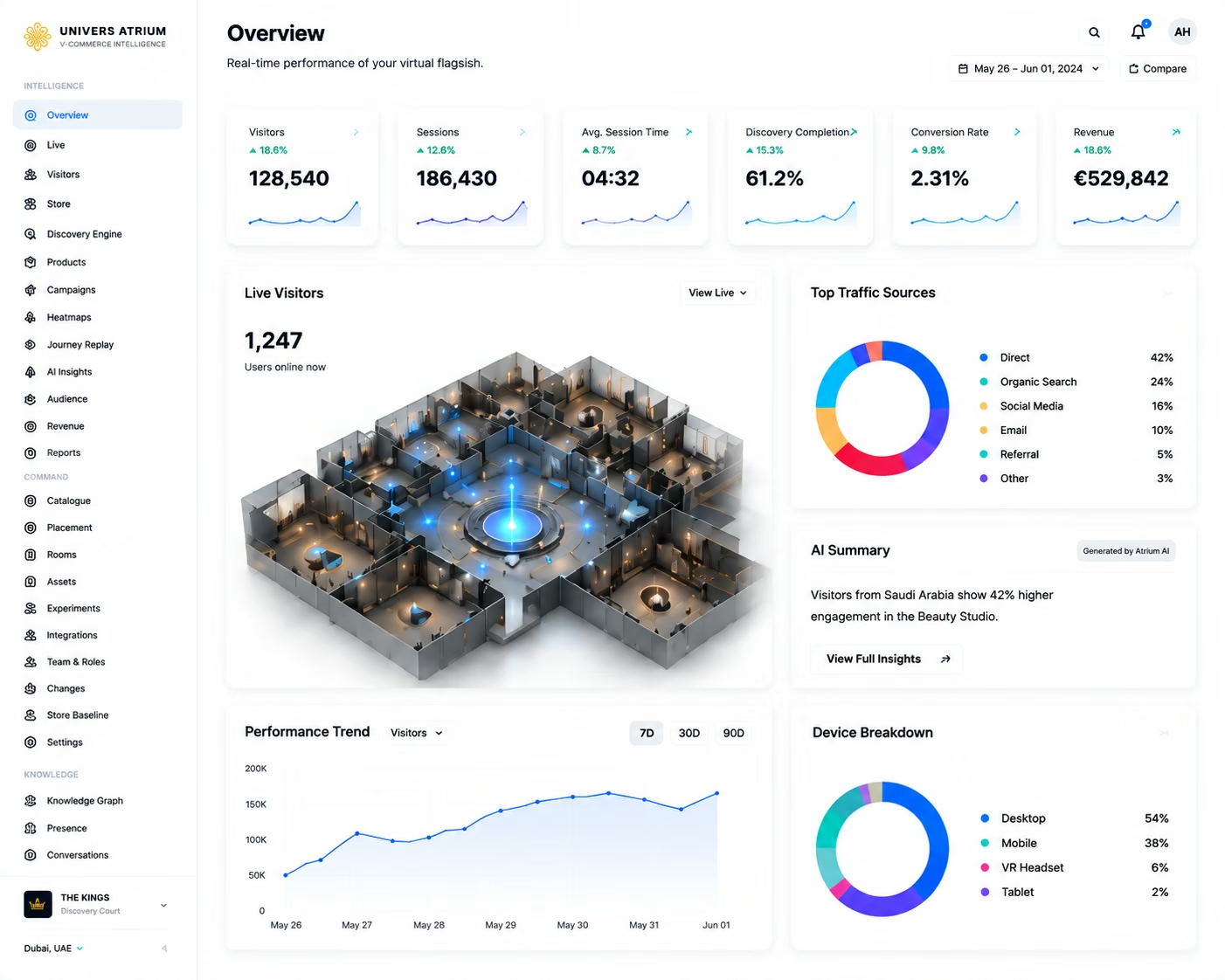
Atrium is the answer. It ships inside every build, and it is the difference between a world your house looks at and a flagship your house operates.
Intelligence
What happened.
Overview
The state of the flagship in one screen, against the period before it.
Live
Who is inside the world right now, and where they are standing.
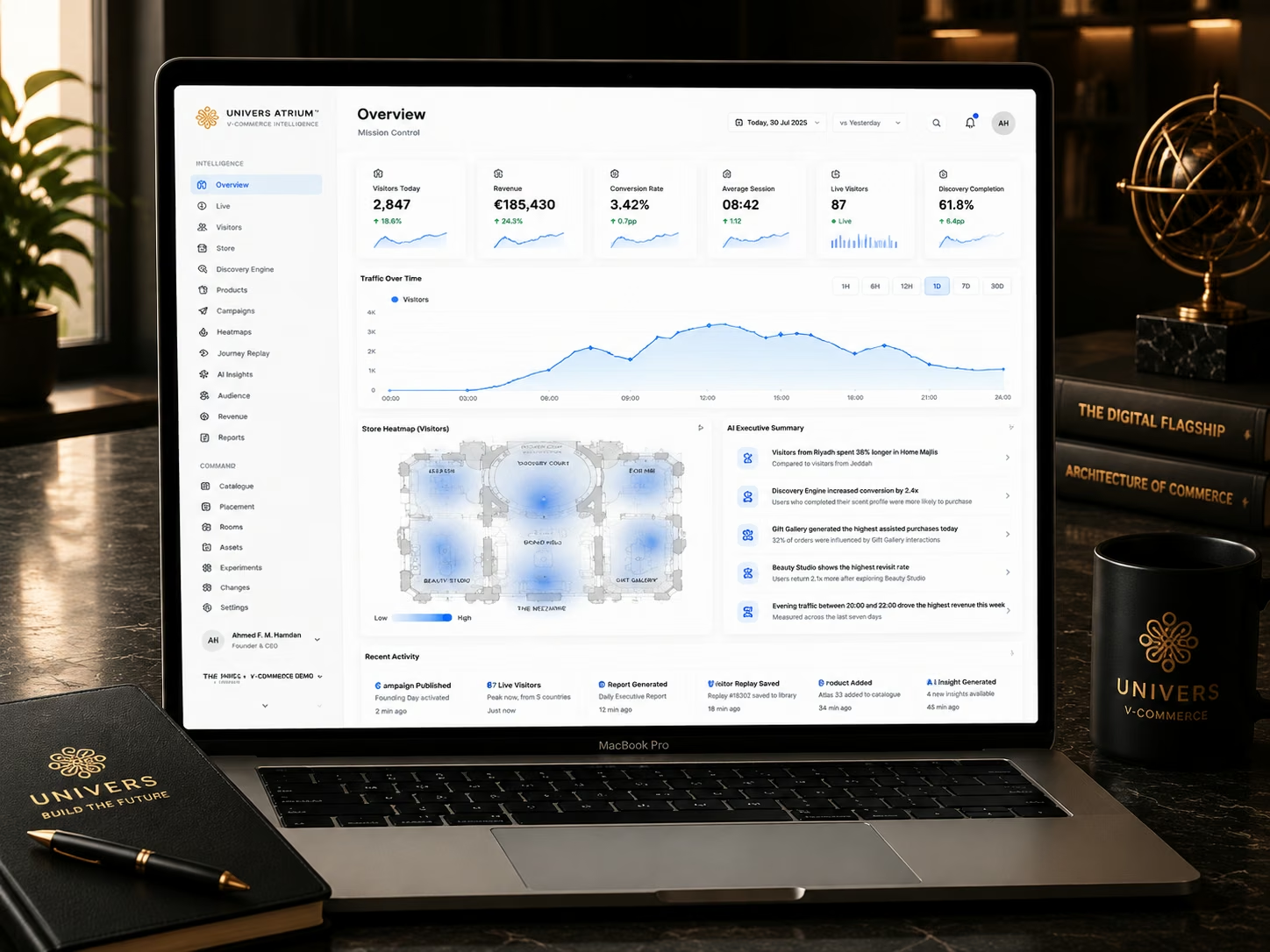
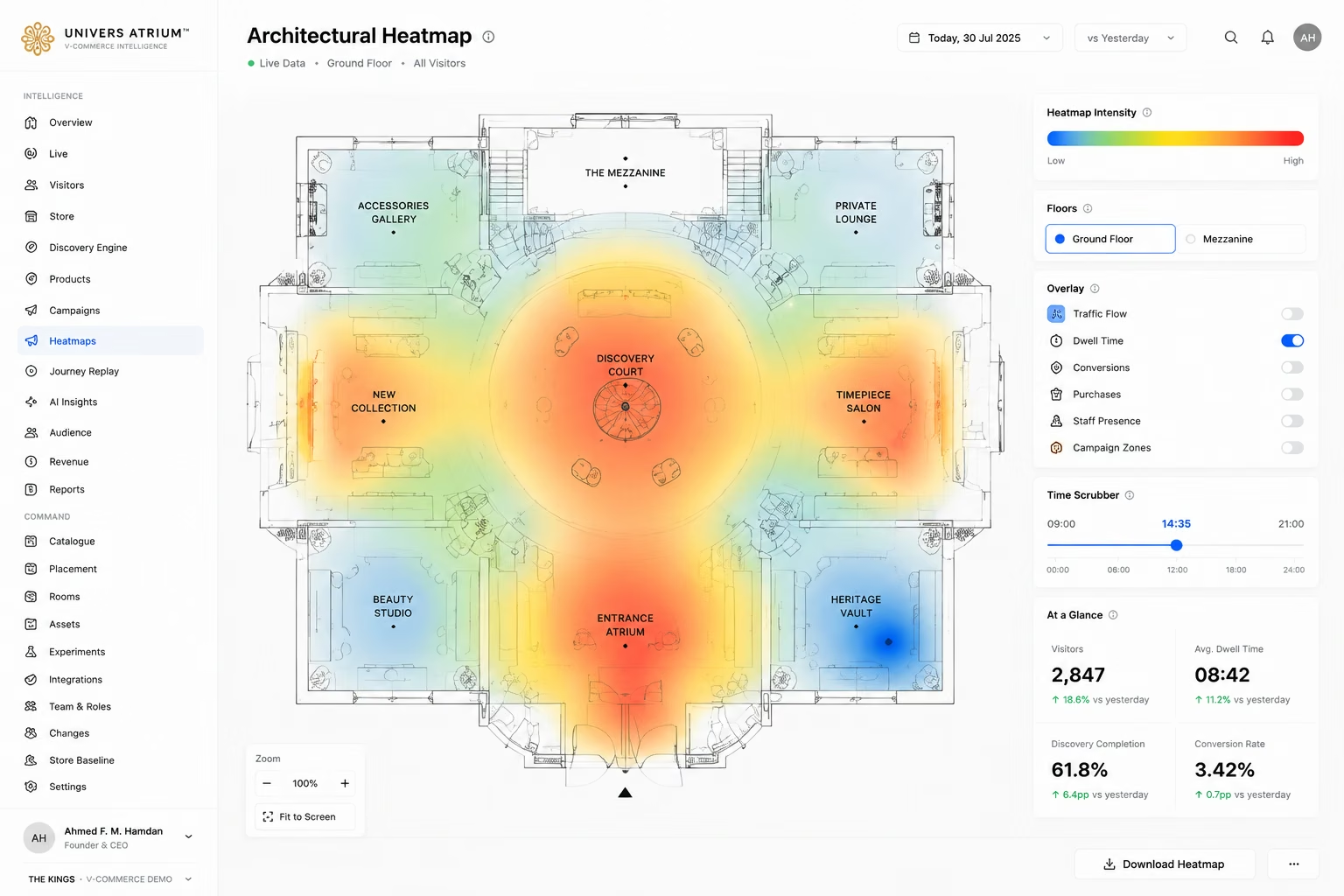
Heatmaps
Seven measures laid over the real floorplan: visitors, dwell, revenue, product interest, conversion, drop-off, friction.
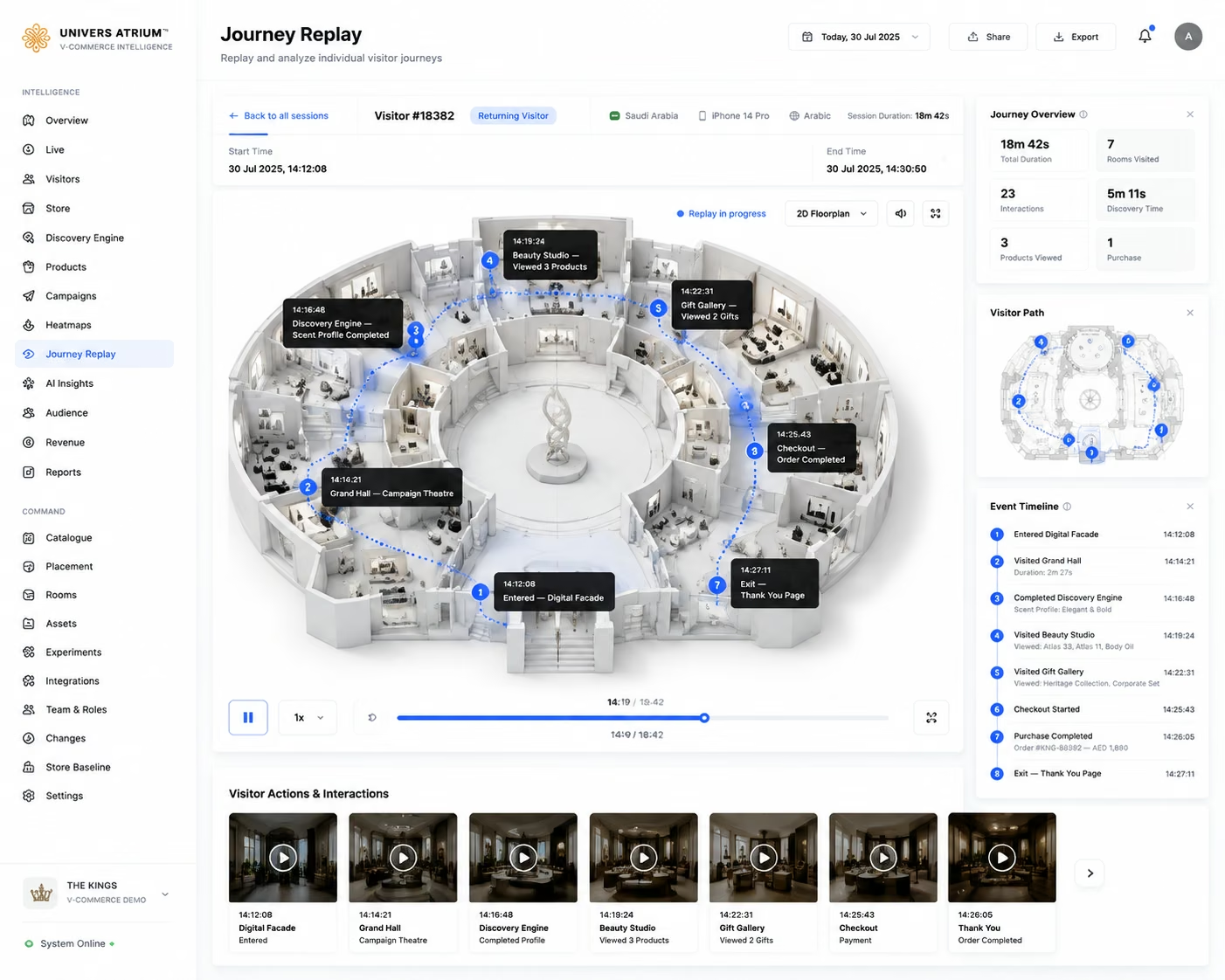
Journey Replay
One visit, reconstructed. The path walked, the rooms entered, the pieces handled, the order placed.
Products
Attention per piece. What was inspected, how long it was held, how far it was turned, and whether it sold.
Revenue
Earnings joined to behaviour, so a room and a position can be held to a number.
Command
What happens next.
Spatial analytics tell you what happened. Running the virtual store is the other half: acting on what you saw the same afternoon, with your own people, and on your own authority.
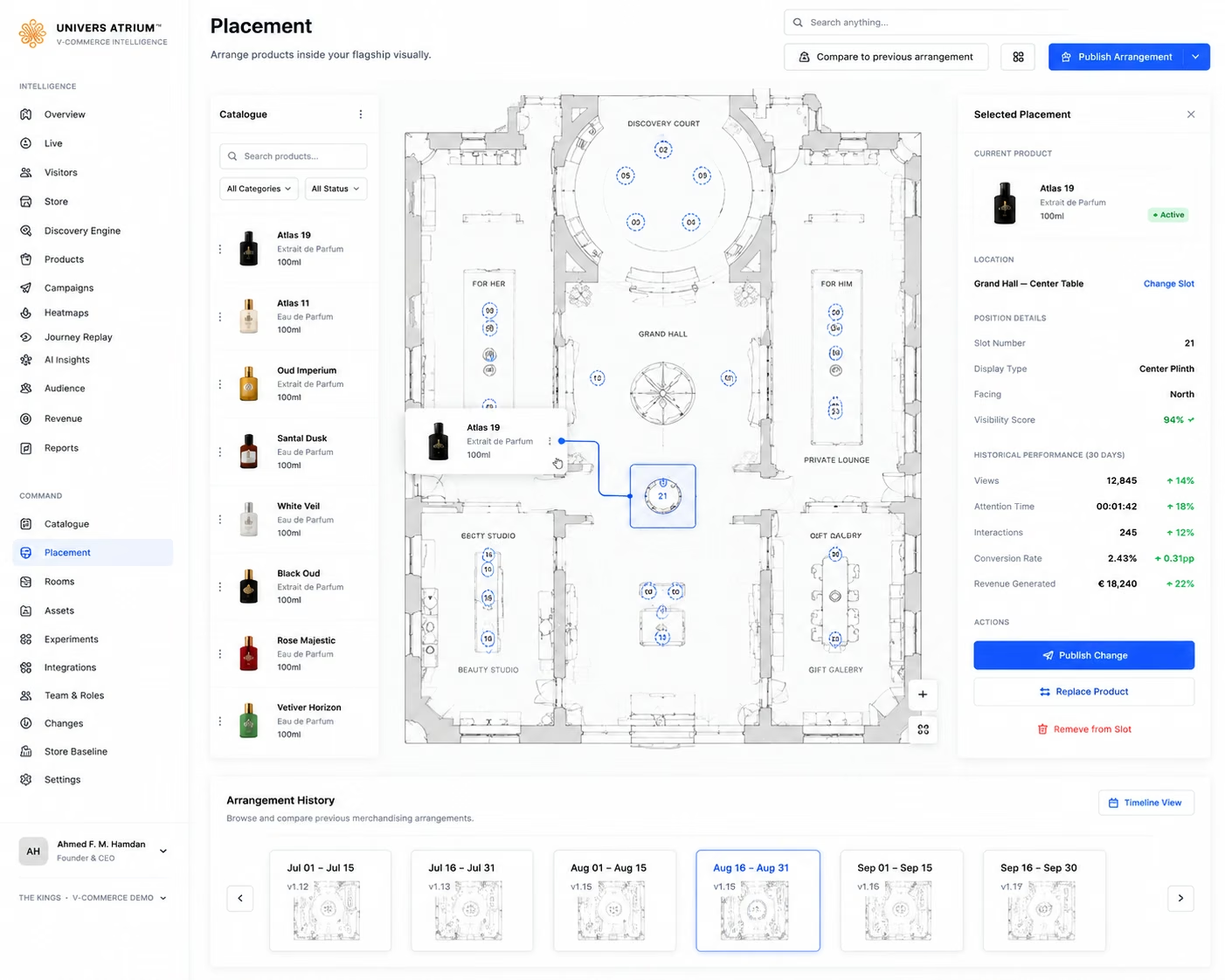
Catalogue
Products, prices, descriptions and availability, edited by your team.
Placement
Assign a piece to a plinth, a case or a wall. Reorder the room from a dropdown.
Rooms
Open, close and schedule. A season begins and ends without a release.
Assets
Upload a model and have it compressed, scaled and placed automatically.
Experiments
Change one thing, and have the same room measured before and after it.
Team and roles
Permissions that fit a house, and an audit log of who changed what.
Nothing waits for a release.
Only possible on a floor
Four things a website cannot tell you.
A web page has no geometry, so there is nothing to stand in and nothing to pick up, which is why ordinary analytics stop at the click. These four exist because a flagship has a floor, and because the world was authored here rather than instrumented afterwards.
Where people actually stood
Not a scatter of coordinates. Heat laid over the true floorplan of your own building, so a dead corner is visibly a corner and a crowded threshold is visibly a threshold. Physical retail has wanted this for a century and settled for door counters.
Which pieces were picked up and put back
How long a piece was held, how far it was turned, and whether it went back on the shelf. In a shop nobody can tell you this. On a website there is nothing to pick up. Here it is simply recorded, and a piece that is handled constantly and never bought is the most useful thing a buyer can learn.
Which rooms earn their footprint
A flagship knows the rent on every square metre. Atrium computes attention and revenue per square metre of the world you built, which turns the report on the last build into the brief for the next one.
Change belongs to the house
Move a piece, open a room, retire a campaign. Your own team, the same afternoon, without waiting on anyone. Every change is recorded, and the room is measured before and after it without being asked.
The intelligence
E-commerce lost the salesperson.
A great salesperson is most of why a considered piece sells in a boutique and does not sell from a grid of thumbnails. Someone who reads you, knows the stock, knows what goes with what, and remembers you were in last month. E-commerce replaced that person with filters and a star rating.
A V-Commerce environment gives back the space. The intelligence inside it gives back the salesperson. At no additional cost per visitor, in every language, at three in the morning.
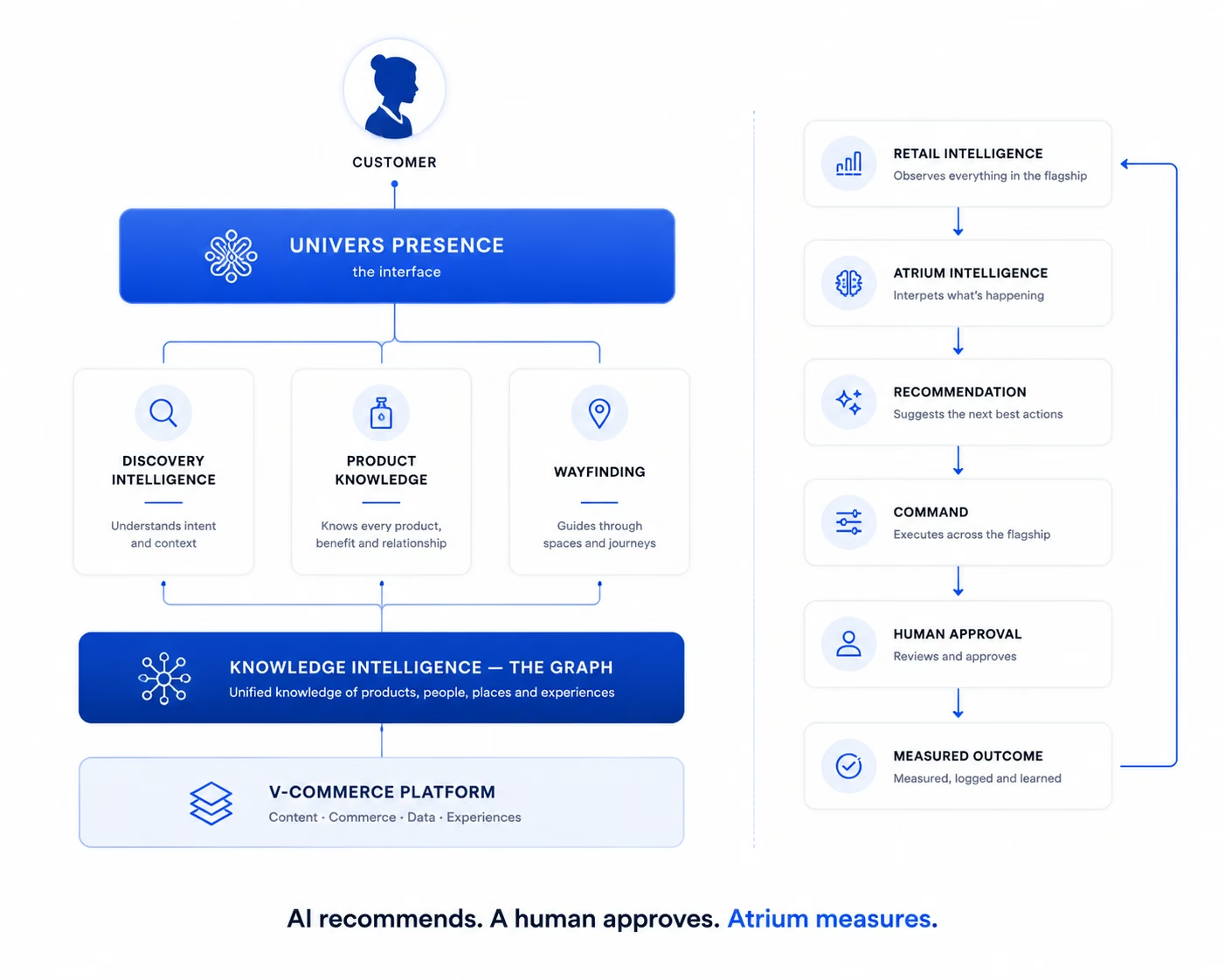
Presence
The interface a visitor actually meets. It routes and it hosts; it never reasons alone.
Discovery
Understanding intent. A conversation rather than a questionnaire: something for a wedding, elegant, not loud.
Knowledge
The graph. Products, people, places and relationships, which every other layer asks rather than guessing.
Retail
Watches the flagship and proposes. It observes and recommends. It does not act.
Content
The pipeline. Optimisation, levels of detail, descriptions, translations, tags, publishing.
Three things a chatbot cannot do.
It knows what you are holding
A chatbot knows which page you are on. Presence knows you are standing in the room, that you picked a piece up twice, turned it right around and set it down. That is the context a good salesperson has, and no website has ever had it.
It can walk you there
The answer to a question is not a list of links. The house takes you to three pieces, in order, explaining each on the way. A web page cannot do this because a web page has nowhere to walk.
It can move footfall
A physical store cannot move its customers. If a room is not being reached, Presence can bring people to it, and because Atrium measures what followed, it either proves itself or is switched off.
Your house stays in control of it. The intelligence recommends and your team approves, so nothing in the flagship changes unless someone decides it should. And every answer draws on your own catalogue, your own floorplan and your own record of what happened, so you can open any insight and see exactly where it came from.
The commitments
Built to be checked.
Self-hosted, always
Every house gets its own deployment and its own database. Never shared, never pooled. Your visitors’ data has not left your infrastructure, which under GDPR or PDPL is a requirement rather than a preference.
Measured, never estimated
Every figure is something that happened. When there is not yet enough evidence to be sure, Atrium tells you that plainly instead of showing you a number you cannot rely on.
Nothing is predicted
Atrium suggests what to test, then tells you what actually happened. Every figure you present is one you can stand behind, because it is a record of something that took place rather than a projection of something that might.
No customer data ever leaves your deployment.
See it running on a real flagship.
Atrium is shown running against a working 3D environment, not a slide. Every engagement is scoped to what a luxury house actually needs, so the conversation begins with your building rather than a price list.