01
Arrival
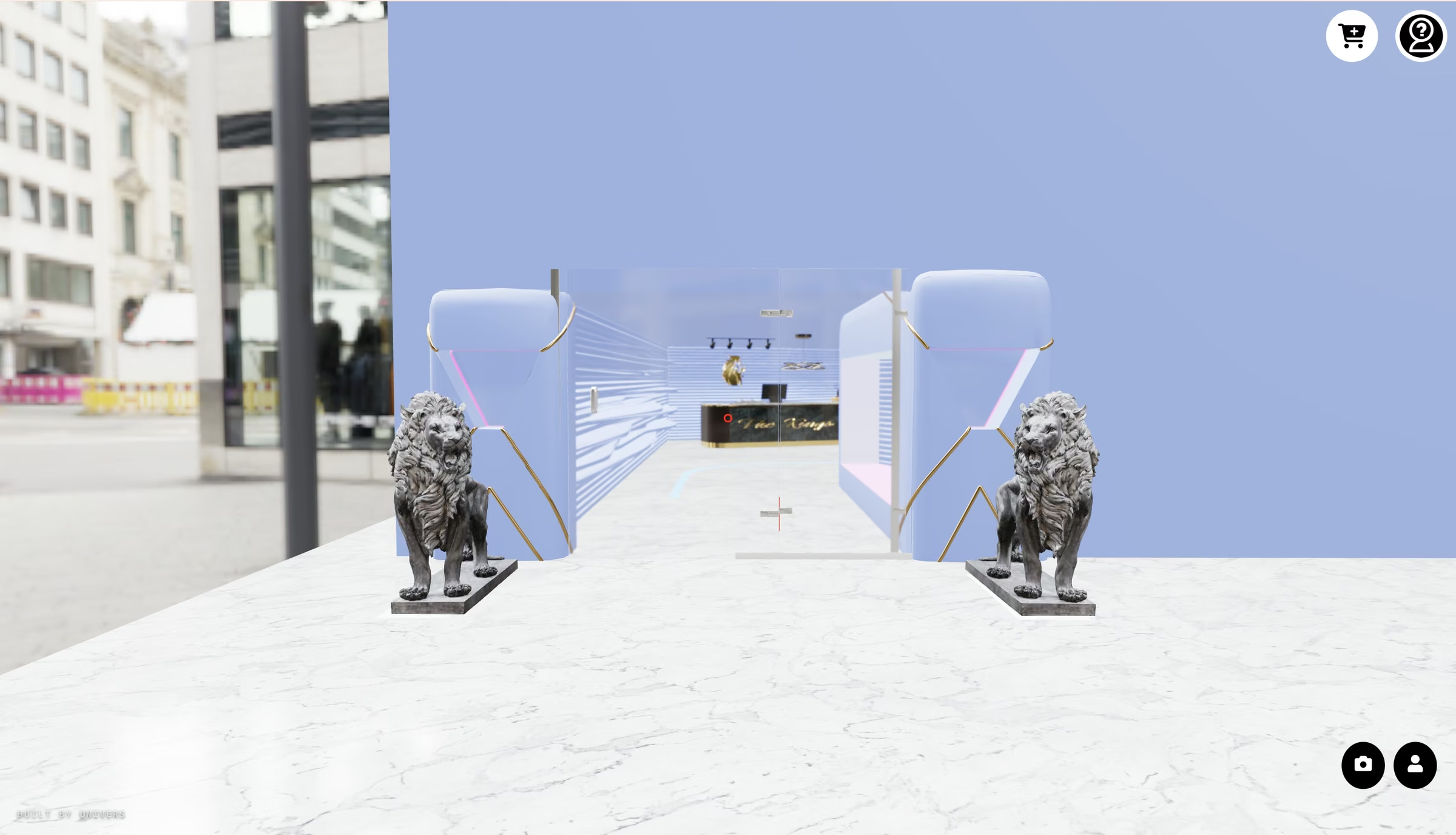
You start on the street.
The store sits in a real place, not a void. You approach the doors on foot, the way you would approach a shop. Nothing has been downloaded and nothing has been installed. This is a browser tab.
What you are looking at
It runs in the browser you already have open.
Desktop, phone or tablet. And on a headset, when a house wants people standing inside it.
Products open, go into a basket, and check out.
Build an avatar before you walk in, and be present in the room rather than hovering over it.
Arrival
The store sits in a real place, not a void. You approach the doors on foot, the way you would approach a shop. Nothing has been downloaded and nothing has been installed. This is a browser tab.
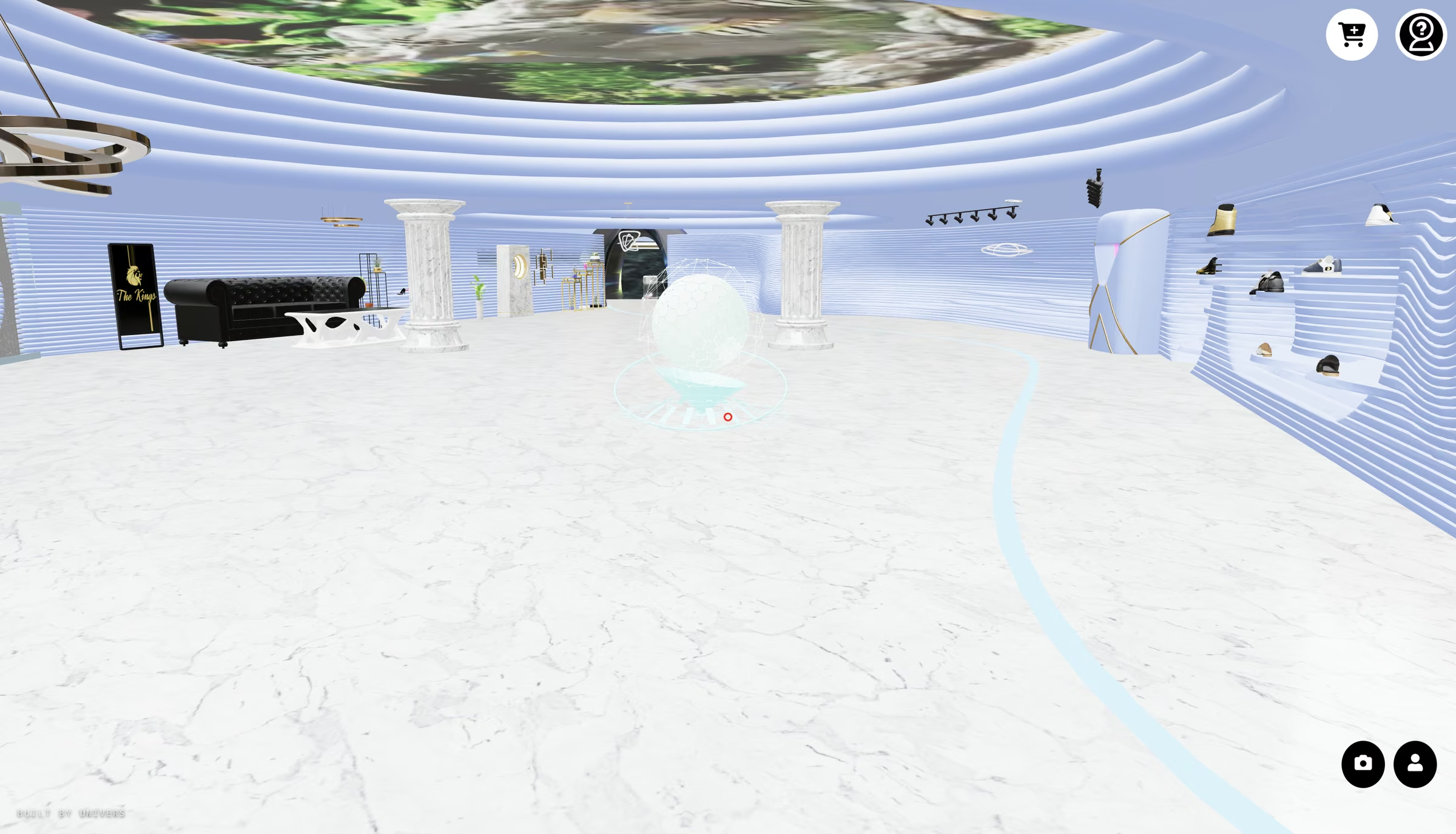
The floor
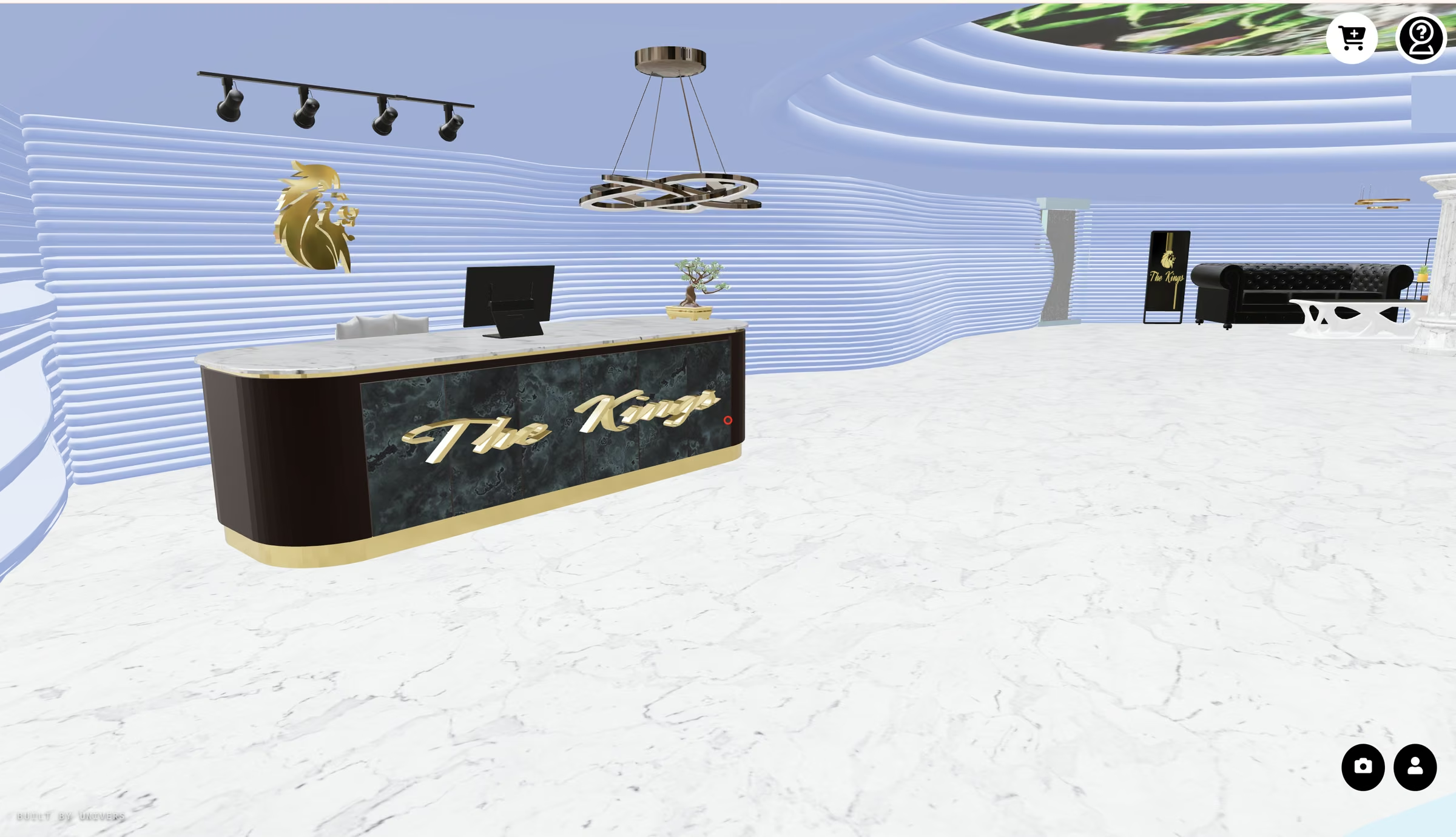
Walk where you like. The camera is yours, not a fixed tour on rails. Look up and the ceiling is open; look left and the counter is where a counter would be. Space is doing the work that a grid of product tiles usually fails to do.
The product
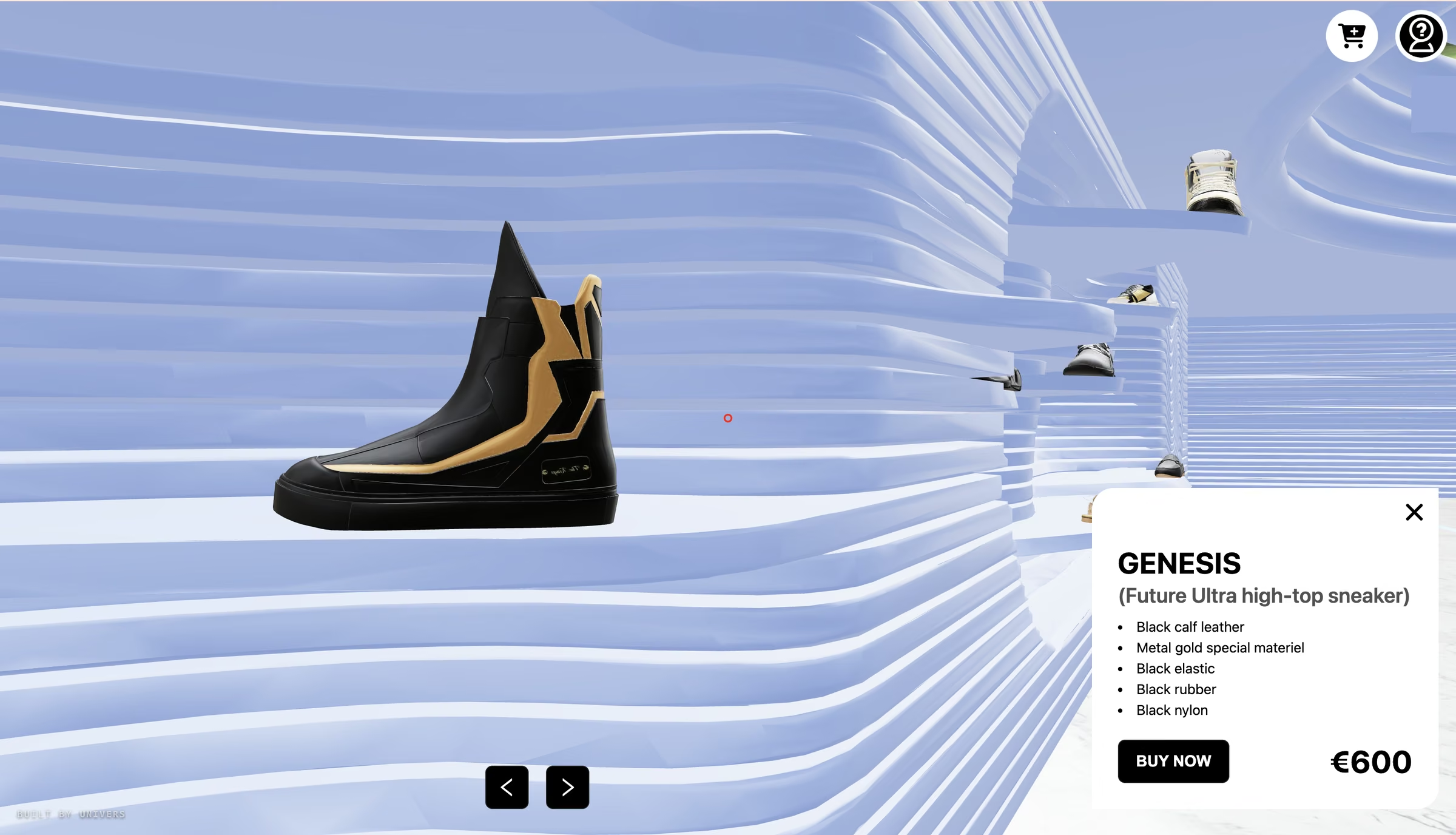
Walk to a product and open it. The piece lifts out, turns under your control, and tells you what it is made of and what it costs. From here it goes into a basket and through a real checkout. This is the part that is a shop rather than a showreel.
Passage
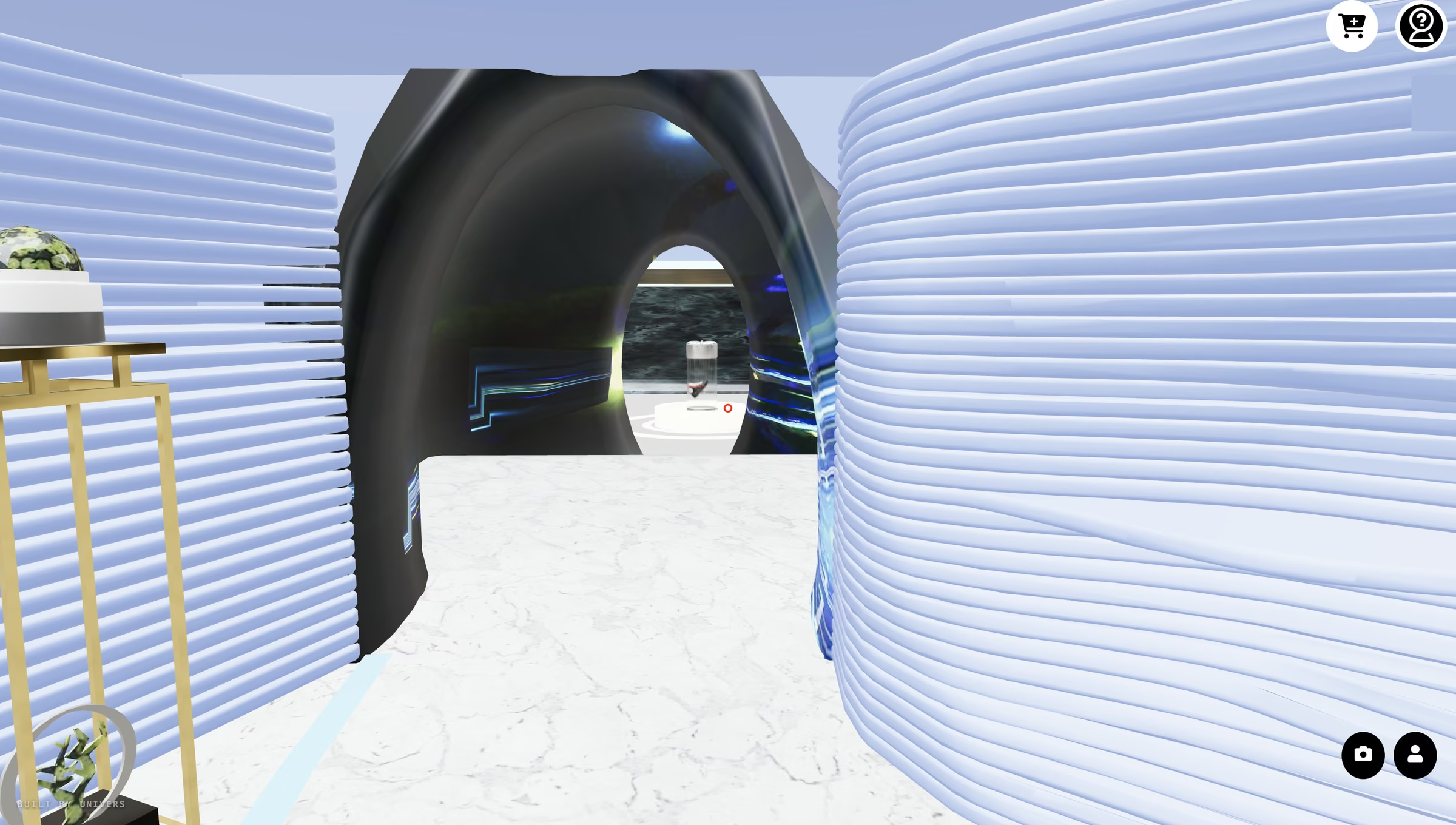
Architecture can hold a sequence. A doorway is a decision, and what waits on the other side can be earned rather than listed. A brand that thinks in floors and thresholds is not limited to a menu.
Beyond the door
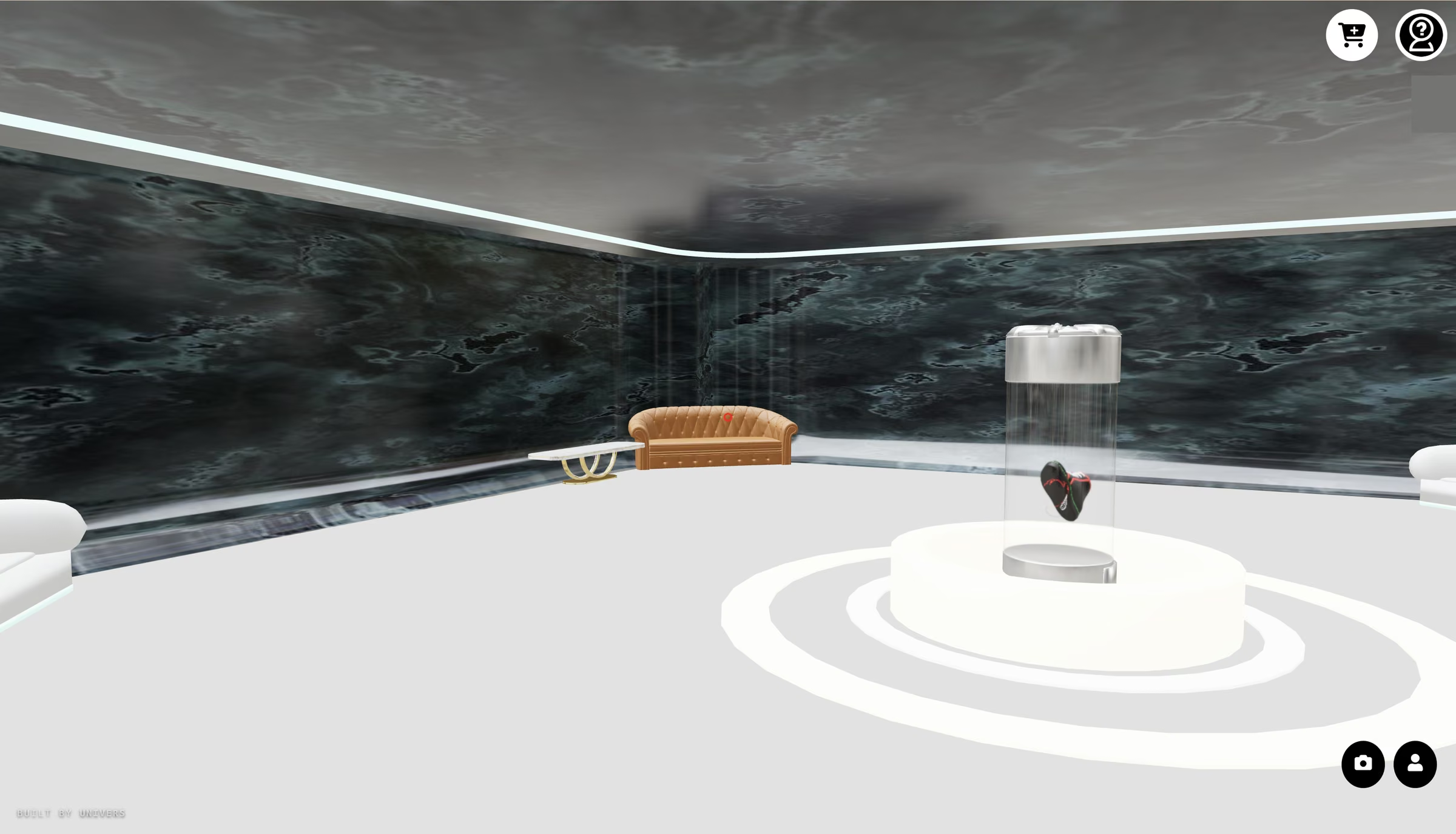
Past the threshold the material changes and the room quietens. Membership, private views, pieces held back for the people a house chooses. In a web store that is a permission flag. Here it is a room you have to reach.
What a build includes
The whole commercial surface, not a showcase sitting beside your real shop. Catalogue, stock, basket, payment, receipt.
Designed to the house rather than chosen from a template. Its architecture, materials, lighting and sequence are yours, and should look nothing like anyone else’s.
First person, free look, walked at your own pace. On a phone as well, and on a headset when a house wants one. This is the line between a place you are inside and a video you are watching.
Checkout and membership run through your existing payment stack. We never hold your money and never touch your customers’ cards.
The layer that turns a world into something you run: what happened inside it, and what happens next. It ships with every build.
Univers Atrium
Behaviour on its own is a curiosity. Atrium joins it to money: what a visitor did in the room, set against what the house earned from it. And it runs inside your own deployment, on your own database, so nothing about your customers ever leaves your control. Under GDPR or PDPL that is a procurement requirement rather than a preference.
What happened.
Not page views. Where people walked, which rooms held them, which pieces they picked up, turned over and put back down without buying. Floor and sightline heatmaps, session replay, attention measured per product, and the rooms you paid to build that nobody enters.
What happens next.
Your team runs the world without calling us. Prices, descriptions and availability are yours to change. Assign a piece to a plinth, upload a new model and have it compressed and placed, open a room for a season and close it after.
Scoped to the house
A digital flagship with sequence and restraint. Rooms reached rather than filtered to, thresholds that mean something, private views and membership for the people the house chooses. Scarcity becomes architectural instead of a badge on a tile. What a flagship says without speaking, said again where most of your customers actually are.
Merchandising and proof. Depth of catalogue, positions tested and swapped, campaign rooms opened for a season and closed after, and every one of those decisions measured against what your current site already does. Not a brand exercise. A second storefront that is accountable for its own numbers.
The category
V-Commerce is spatial commerce that runs on the open web. A brand environment is built in three dimensions and served to a browser, so a customer walks through a place instead of scrolling a list. It was invented by Ahmed F. M. Hamdan and every environment is built by Univers, individually, to the house that commissioned it. There is no product to license and no template to choose from.
The distinction that matters is delivery. Virtual stores have existed for years, behind an install and a device, and that price of entry is the reason they stayed a novelty. V-Commerce removes both. A link opens the store, on a desktop, a phone, or a headset for a house that wants people standing inside it. That is the whole requirement.
What a house gets from that is adjacency and sequence, the two things a product grid destroys. Objects sit next to each other for a reason. A room is reached rather than filtered to. Attention is composed the way it is composed in a flagship, by someone who decides what is met first and what has to be looked for, because the medium is finally the same shape as the intention.
What the industry already measures
94%
higher conversion on products presented in 3D
Shopify
43%
fewer returns, with average order value up 28%
Wayfair, View in Room
66%
of shoppers less likely to return an item after seeing it in three dimensions
Snap and Publicis, 2025
Those are the figures for putting a single product in three dimensions on an otherwise flat page. A building your customers walk through is a considerably larger proposition. Rather than quote you someone else’s number for it, Univers Atrium measures your own, against the site you are running today.
The argument
A luxury flagship is an argument. Proportion, material, the quality of the light, what a visitor meets first and what they have to walk further to find. Houses spend on that because it says something no line of copy can say, and because the right to say it takes decades to earn.
Then the same house goes online and becomes rectangles in a grid. The same grid as the house across the street. The same grid as a company founded last Tuesday. A century of distinction, flattened into a template it shares with everyone, and the only remaining levers are price and photography.
Nobody chose that. It was a limit of the medium, and it has stopped being a limit.
V-Commerce gives back the instrument that was taken away, which is space. Sequence instead of a menu. A threshold instead of a filter. Something a visitor walks toward rather than scrolls past. And it does it on the open web, where your customers already are, with nothing standing between them and the door.
The world we build is yours. Its architecture, materials, light and the order in which things are met are designed to your house, and should resemble nothing else, including this one. The engine underneath is ours, and it is the part nobody needs to build twice. It runs on your infrastructure. Your payments stay in your stack. Your customers’ data never leaves your deployment.
You own the world. We keep it standing.
Your customers already know how it feels to walk into your store. That feeling is most of the reason they buy, and it is the one thing a product page cannot carry. So they arrive, compare on price, and leave.
Give them the room instead. They stay longer, they pick things up, they buy with more confidence and send less of it back. And because the world is instrumented, you finally see which part of your own store did the work: which piece was handled and set down, which room nobody enters, which position sells and which one never has.
That is what this is for. Not a campaign and not a showpiece. A second storefront that carries your name properly, and answers for its own numbers.
Give it a moment to load, then walk in. Everything you have just read is something you can go and check.
Enter the store