


UNIVERS V-COMMERCECommerce becomes a place.
Enter a brand’s own navigable commercial world on the open web. Arrive through an address, walk through connected rooms, and approach products where they stand.
Powered by Univers Engine. Operated through Univers Atrium.
THE DEFINITION
What is Univers V-Commerce?
Univers V-Commerce is a web-native spatial commerce architecture and a new commercial channel: a brand’s own navigable commercial world on the open web.
It brings architecture, products, movement and commerce into one continuous experience. Customers enter the brand’s world directly. Search engines and AI readers can understand its published places and products. With a customer’s permission, an authorised agent can act within the brand’s rules.
Invented by Ahmed F. M. Hamdan and created by Univers in 2023, V-Commerce turns a virtual store into a real one: a 3D store a customer walks into and shops inside, with real products, real prices and a real checkout, in any modern browser on any device, with no app and no plugin.
It is not virtual reality retail that demands a headset, not augmented reality that demands an app, and not a 360-degree photo tour. It is an immersive, fully interactive 3D shopping environment, made by hand for luxury and high-consideration houses, which customers can also enter with a VR headset if they choose.
ARCHITECTURE
A place, not a page.
A room creates context. A threshold marks a change. A product occupies a position you can approach, leave and find again. Distance, proportion and the relationship between objects become part of how a brand presents its collection.
The world gives customers room to explore. A gallery can introduce a collection; a quieter room can hold a more considered encounter. Each space has a role in the commercial experience.

ENTER · WALK · EXPLORE
Cross the threshold. Keep walking.
An address opens the world in a supported browser. From the entrance, customers move continuously through connected space using familiar keyboard and pointer controls, touch controls, or supported VR controls.
Movement follows the world’s physical boundaries. Collision and physics give floors, walls and objects a consistent spatial relationship; the customer walks through the architecture rather than clicking between disconnected viewpoints.
V-Commerce is current on phones, tablets, computers and supported browser-capable VR headsets. No app installation is required. A headset is an optional way to enter the same world.
Keyboard and pointer · Touch · Supported VR controls
Continue to products


PRODUCT INTERACTION
Products behave like things.
Approach a piece in its setting. Pick it up for a closer look. Turn it, inspect it, put it back, or carry it towards a basket. Customers can move on and revisit the pieces that caught their attention.
The product remains part of a place throughout the encounter. Its position, nearby pieces and surrounding room help give it context before the customer chooses what to do next.



ONE WORLD
Three ways to engage with the same place.

Human experience
The human experience is a navigable world: rooms to enter, products to handle and choices to make.
Machine-readable representation
The machine-readable representation gives search engines and AI readers published facts about products and places. Reading those facts does not grant customer authority.
Authorised-agent representation
The authorised-agent representation lets an assistant act for a person within an explicit permission boundary. It understands the place and the permitted action, while customer consent and brand policy determine what it may do.
This piece · this room · may add to basket · revocable · checkout off

UNIVERS VISIBILITY
A world the open web can discover.
Published product and place addresses connect a spatial world to discovery on the open web. Search engines and AI readers can find and read the information associated with a room, a product or a destination.
Visibility makes that machine attention legible to the brand: what was read, which place it concerned and how discovery develops. Publication, discovery and indexing are distinct stages; being published does not guarantee a search position.
A machine reading a product is discovering information. It is not acting on a customer’s behalf.
- Published place
- Product facts
- Availability
UNIVERS ARRIVAL
An address becomes a place.
A link can lead beyond the front door. Arrival connects an address to the exact live room, product or place it identifies, so the customer reaches the subject of their interest in its spatial context.
The piece remains part of its world. From that arrival point, the customer can inspect it, explore nearby products or continue through the store.

UNIVERS EMISSARY
An agent enters with a person’s permission.
Emissary opens an authorised-agent channel into the brand’s world. An assistant can understand products, places and availability, then perform permitted actions for the person it represents.

Assistant-first: the customer starts with their assistant and follows the brand-hosted consent journey to review and grant access.

Account-first: the customer connects an assistant from Personal Space and gives it a revocable way to identify itself.
Both paths are built. Authority stays bounded, visible and revocable. Govern applies the brand’s admission rules, capability limits and confirmation requirements; the customer can end the assistant’s access.
Agent checkout is currently switched off.
An assistant that has not yet been trusted is never simply turned away. It is handed an invitation back to the store, where the customer decides in a moment, on the house’s own ground, what it may do. Assistants set pieces aside and send the customer back to the store to buy, on the customer’s word and never beyond it.
Customers choose their assistant, whether it lives in a chat window or in a terminal on their desk. One without a browser is paired with a key the customer creates in their account: single use, short-lived, carrying only what they chose, and ended from the same place at any moment.
Univers publishes the Univers V-Commerce Protocol, an open definition of how an assistant understands a store as a place and how a customer gives one permission to act. Two capabilities are published: Place and Identity. A V-Commerce store is not a closed box. It speaks a language any assistant can learn.

CUSTOMER CONTINUITY
The relationship continues after the visit.
Personal Space gives the customer somewhere to return: their account, the assistants they have permitted, the pieces a visit left waiting, their orders and their delivery details, and the private room if the house has admitted them.
It opens over the store rather than taking the customer out of it. They are still standing in the room while they look.
Together these connect discovery, consideration and return, so a customer does not have to treat every encounter as a first visit. Each brand's own space carries the parts of the relationship that brand keeps.
Customers gather several pieces and check out once. Membership of the private room is remembered, so its door opens for a member every time they return, and the house always knows who its members are.
- Account
- Assistants
- Waiting
- Orders
- Delivery
- The private room

UNIVERS ENGINE
One continuous world, across the browser.
Univers Engine powers the spatial experience: connected rooms, physics-based movement, product interaction and persistent spatial state.
It gives the world a consistent sense of scale and continuity as customers move through it. The same commercial place can be entered on phones, tablets, computers and supported browser-capable VR headsets.
The result is a world the brand can compose and the customer can inhabit at their own pace.
UNIVERS ATRIUM
The world is only the beginning.
V-Commerce is the world. Univers Atrium is how the brand operates, measures and governs it.
Place products, manage rooms and catalogue information, review changes and publish a controlled state. Understand journeys, positions and product handling. Govern machine access and authorised-agent activity while retaining a memory of how the world changes.
Atrium brings those responsibilities into the operating system behind the experience.
Explore Univers Atrium
FIRST-PARTY LIVE DEMONSTRATION
Walk The Kings.
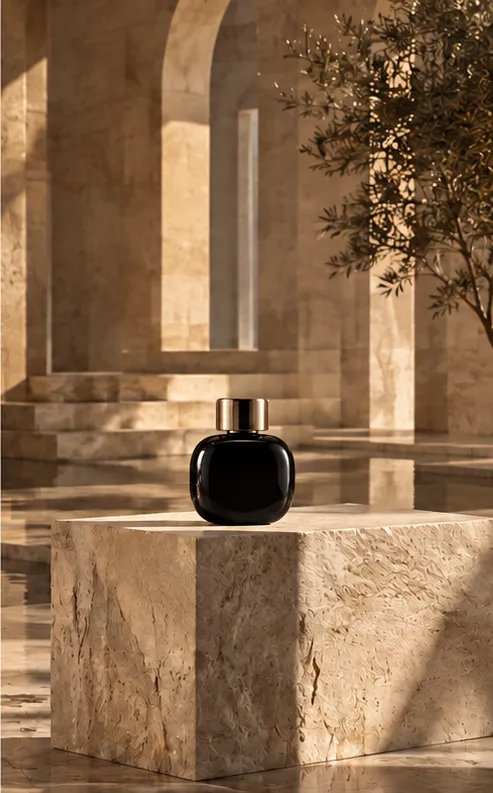
The Kings is Univers’s first-party V-Commerce demonstration. Enter the store, move through its rooms and inspect a product in its setting.
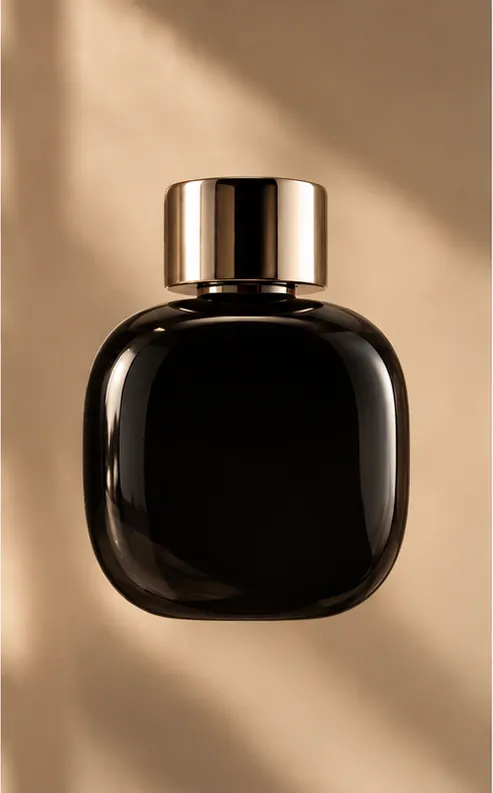
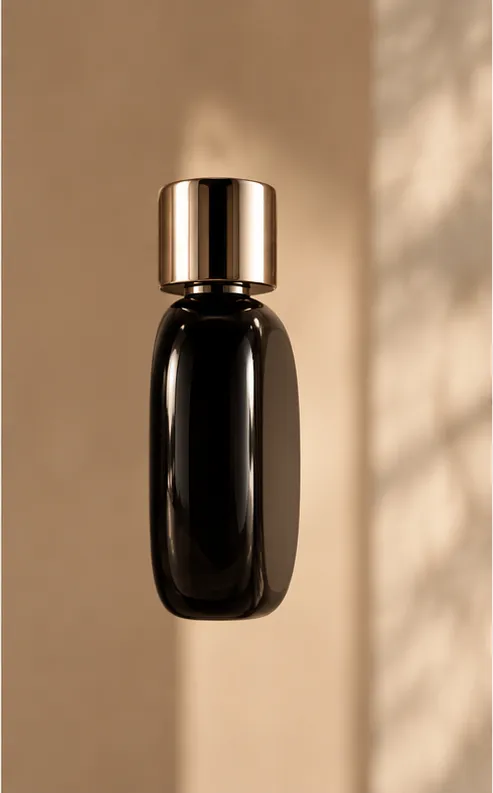
These images come from the genuine demonstration. They show a built experience you can explore, rather than a commissioned client deployment or a claim of commercial uplift.


BUILT FOR THE BRAND
One brand. One world.
A V-Commerce world is developed for the brand’s own character, collection and customer relationship. Its architecture, merchandising and access rules form one commercial destination.
Univers works with the brand on the operating and integration boundaries around that destination. Catalogue, identity and commerce connections are agreed for the deployment, together with the responsibilities needed to run it.
This is a bespoke commercial channel, not a shared virtual mall or a template storefront service.

QUESTIONS
About V-Commerce.
What is V-Commerce?
Univers V-Commerce is a web-native spatial commerce architecture and a new commercial channel: a brand’s own navigable commercial world on the open web.
What is spatial commerce?
Spatial commerce organises the shopping experience around places, positions and movement. Customers explore a space and interact with products in context. V-Commerce is Univers’s architecture for that commercial channel.
Is V-Commerce a platform?
V-Commerce is a bespoke spatial commerce architecture, not a login-and-build storefront service. Univers develops a brand’s own commercial world rather than offering shared mall space or template shops.
Does V-Commerce require an app?
No app installation is required. Customers enter through an address in a supported browser on a phone, tablet, computer or supported browser-capable VR headset.
Does it work on VR headsets?
Yes. Supported browser-capable VR headsets are a current access option. Customers can also enter on a phone, tablet or computer; headset access is optional.
How do customers move?
Customers walk continuously through connected space using familiar keyboard and pointer, touch or supported VR controls. Collision and physics respect the world’s boundaries. Normal movement is not a sequence of click-to-jump viewpoints.
Can search engines and AI read the world?
Yes. Published product and place information can be discovered and read by search engines and AI readers. Indexing and search placement depend on the reader; publication is not a ranking guarantee.
What are Visibility, Arrival and Emissary?
Visibility concerns discovery and reading by machines. Arrival connects an address to an exact live place. Emissary enables an authorised agent to act for a person within customer permission and brand policy. These are distinct roles.
What is Atrium?
Univers Atrium is the operating system behind a V-Commerce world. It brings together operation, controlled publishing, state memory, spatial intelligence and governance.
Can agents act for customers?
Yes, within granted permissions and brand rules. Account-first and assistant-first authorisation paths are built, and access is bounded, visible and revocable. Agent checkout remains switched off.
How is it different from a 3D product viewer?
A product viewer focuses on an individual object. V-Commerce connects product interaction to an entire navigable commercial place: rooms, positions, movement, identity, commerce and an operating system behind the world.
ENTER THE CHANNEL
Walk the channel before we discuss building yours.
Experience The Kings, then talk with Univers about a world developed for your brand.